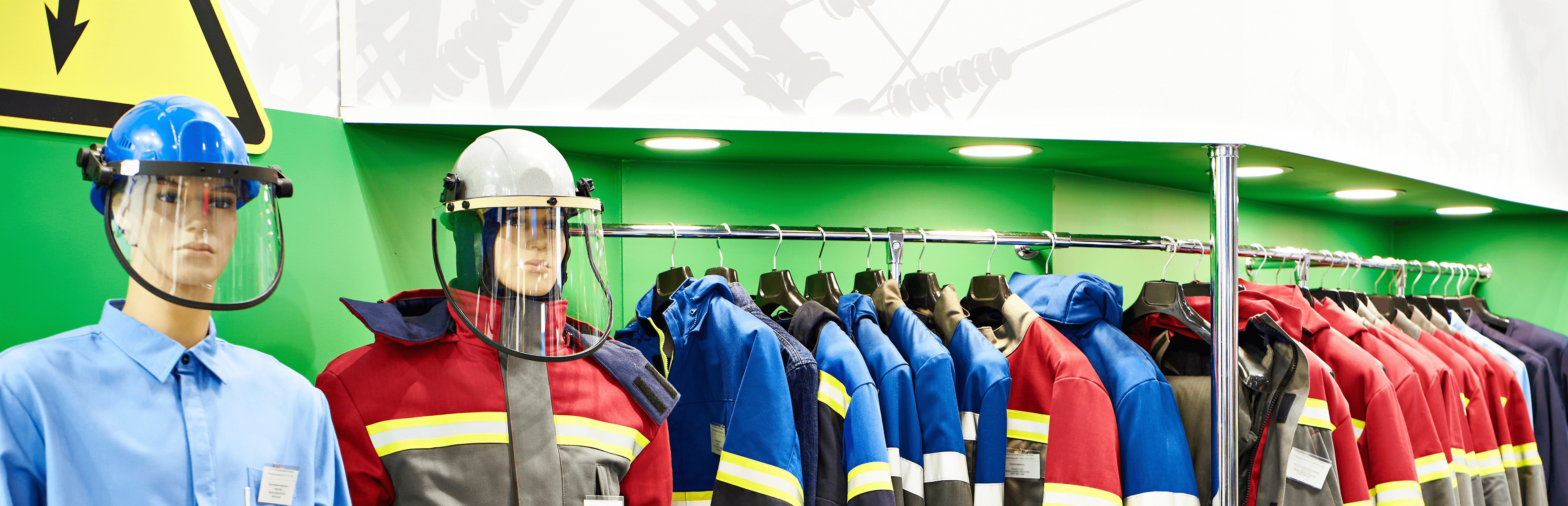
The protection and safety of workers is something basic that any company must guarantee. Body protection is usually carried out with special work clothes , such as pants, shirts or jackets, overalls, aprons, leggings or any garment that has the purpose of providing protection against a specific risk. This type of clothing is called protective clothing.

In today's article we will review the regulations for work clothes intended for the total or partial protection of the body of employees. Here we go!

When is work clothing considered personal protective equipment (PPE)?

The first thing to keep in mind is that work clothes are divided into two classes:

  • Clothing intended for the protection of workers.
  • Uniforms and clothing that is not intended for protection.

For a work uniform to be considered personal protective equipment (PPE) it must protect the user against one or several risks that may threaten their health and safety. So when is PPE NOT considered? Very simple, when the work clothes do not meet this requirement and other specific requirements.

However, when the work clothes are intended for the personal protection of the worker, the requirements specified in Annex II of Regulation (EU) 2016/425 of the European Parliament and of the Council of March 9, 2016 must be met for their sale. , relative to personal protective equipment.

European applicable regulations

The UNE-EN-340 standard designates the general requirements that protective clothing must meet. Depending on the sector and the type of protection that is needed, there are specific standards that regulate the requirements.

high visibility

High visibility signal clothing

High visibility clothing is intended to make the user's presence visible at all times, under any daylight condition or under vehicle headlight illumination in the dark.

High visibility clothing is grouped into three classes:

  • Class 1: used in activities that allow the user to be fully seen.
  • Class 2: its use is applied in situations where greater visibility is necessary.
  • Class 3: it is used by personnel exposed to great dangers.

cold, water and humidity

Protective clothing against cold, water and humidity

It is applied to materials and seams of protective clothing against the influence of environments characterized by the possible combination of rain, cold, snow and soil moisture.

It contemplates two levels, both with values from 1 to 3:

  • Resistance to water vapor.
  • Resistance to water penetration.

heat and flame

Protective clothing against heat and flame

Designed to protect workers from brief contact with flames and at least one type of heat. The heat can be in the form of convective heat, radiant heat, conductive heat, molten metal spatter, or a combination of these.

All garments must be marked with the codes A1 and/or A2 and one more code B, C, D, E or F:

  • Code A : behavior to propagation of the flame.
  • Code B : resistance to convective heat.
  • Code C : resistance to radiant heat.
  • Code D : resistance to molten aluminum splashes.
  • Code E : resistance to molten iron splashes.
  • Code F : resistance to contact heat.

electrostatic properties

Protective clothing electrostatic properties

Electrostatic requirements and test methods for protective clothing for static electricity prevent sparks that can cause a fire.

high visibility

Protective clothing used during welding and related processes

This type of protective clothing is grouped into two classes:

  • Class 1 : protection against welding techniques and less dangerous situations.
  • Class 2 : protection against welding techniques and more dangerous situations.

high visibility

Protective clothing against the thermal risks of an electric arc

Designed to protect workers exposed to risks of an electric arc. The garments protect the worker from the different damages derived from his exposure to this type of risk.

This standard is grouped into two types of classes:

  • Class 1 : Arc Test 4KA / 0.5 s
  • Class 2 : Arc Test 7kA / 0.5 s

Now that you know the regulations for work clothes and the protection you need for each hazard to which you are exposed, you can choose the one that best suits your sector.

At Impotusa you have all kinds of work clothes for each sector and need. If you have any doubts, our team of experts will advise you so that you can acquire the best protective equipment.

Product added to wishlist
Product added to compare.

This website uses cookies so that you have the best user experience and advertising personalization. If you continue browsing you are giving your consent to accept our cookies policy .